Have you noticed more children in your child’s classroom wearing glasses today compared to when you were at school? It’s not just your imagination. Globally, we are in the middle of a quiet epidemic: the rapid rise of childhood myopia, commonly known as short-sightedness. Recent research published in the British Journal of Ophthalmology reveals that nearly one in three children and teenagers globally are now short-sighted. If current trends continue, experts project that by 2050, myopia will affect more than 740 million young people worldwide.
At The Bromley Eye Centre, we are seeing this global trend play out locally in our community. But why is this happening, and what can we do to protect our children’s vision?
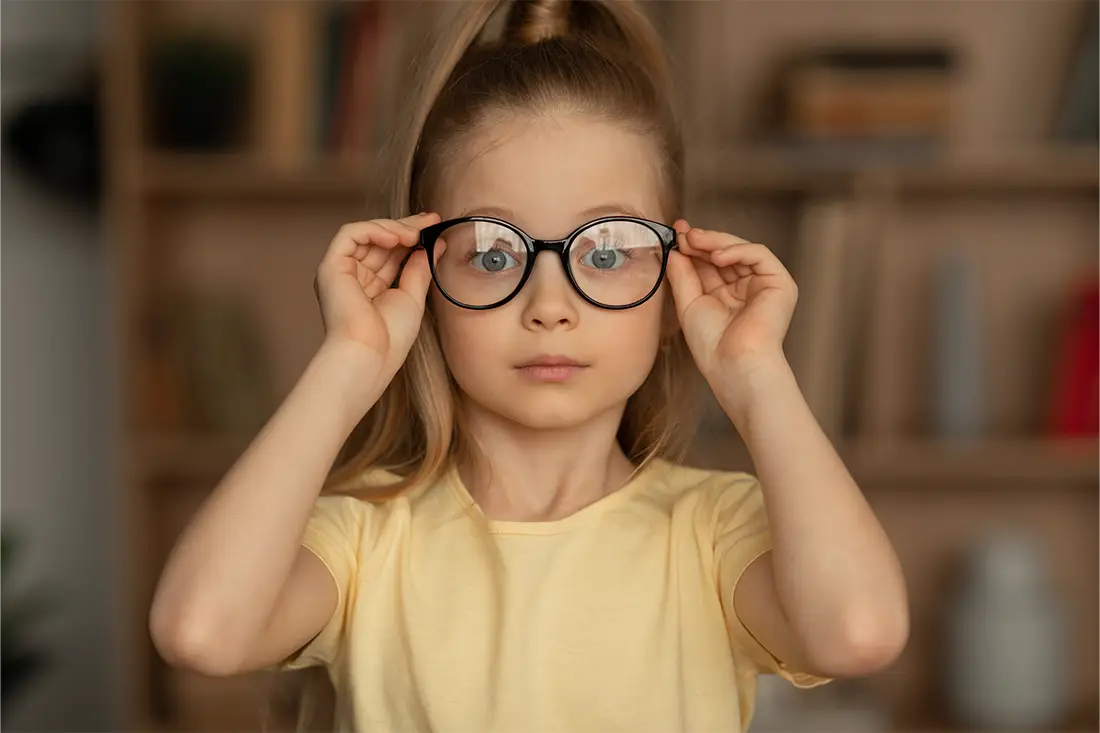
What is Myopia and Why Does It Matter?
Myopia occurs when the eyeball grows slightly too long from front to back (a process called axial elongation). Instead of focusing directly on the retina (the light-sensitive tissue at the back of the eye), light rays focus just in front of it. This makes close-up objects look clear, while things in the distance, like the school whiteboard, appear blurry. While wearing glasses or contact lenses easily corrects the blur, untreated myopia isn’t just about needing stronger lenses each year. If left unchecked, progressive childhood myopia can lead to high myopia later in life. This significantly increases the risk of serious, sight-threatening conditions in adulthood, including glaucoma, cataracts, and retinal detachment.
Why Are More Children Becoming Short-Sighted?
While genetics play a role, a child is more likely to develop myopia if their parents are short-sighted; the sudden global spike points directly to environmental changes:
- The “Near-Work” Explosion: Children are spending unprecedented amounts of time looking at screens, tablets, and books close to their faces. This constant close-up focus strains the developing eye muscles.
- The Loss of Natural Daylight: Children are spending far less time playing outdoors. Natural daylight is incredibly bright; even on a cloudy UK afternoon, outdoor light levels range from 1,000 to over 10,000 lux, compared to just 300 to 500 lux inside a typical, well-lit room. Bright daylight triggers the release of dopamine in the retina, which naturally acts as a “brake” to slow down eye elongation.
What Can Parents Do?
The good news is that we are not helpless. You can take proactive steps at home to protect your child’s sight:
- Encourage Outdoor Play: Aim for at least 1.5 to 2 hours of outdoor time daily. Whether it is playing in the garden, walking to school, or visiting a park, natural light is one of the best preventative shields we have.
- Practice the 20-20-20 Rule: When your child is using a tablet or reading, encourage them to take a break every 20 minutes to look at something 20 feet away for at least 20 seconds. This simple habit relaxes the focusing muscles in the eyes.
- Book Regular Eye Examinations: Children do not always know if their vision is abnormal; they assume everyone sees the world the way they do.
Modern Myopia Management is Here
If your child is already showing signs of short-sightedness, standard glasses will correct their vision, but they won’t stop it from getting worse. At The Bromley Eye Centre, we offer advanced, clinically proven myopia management solutions, including specialised glasses (like MiYOSMART lenses) and custom contact lenses designed to slow down the progression of short-sightedness by up to 60%.
Don’t wait for their prescription to climb. Protect your child’s visual future by booking a comprehensive eye test with our friendly team today!